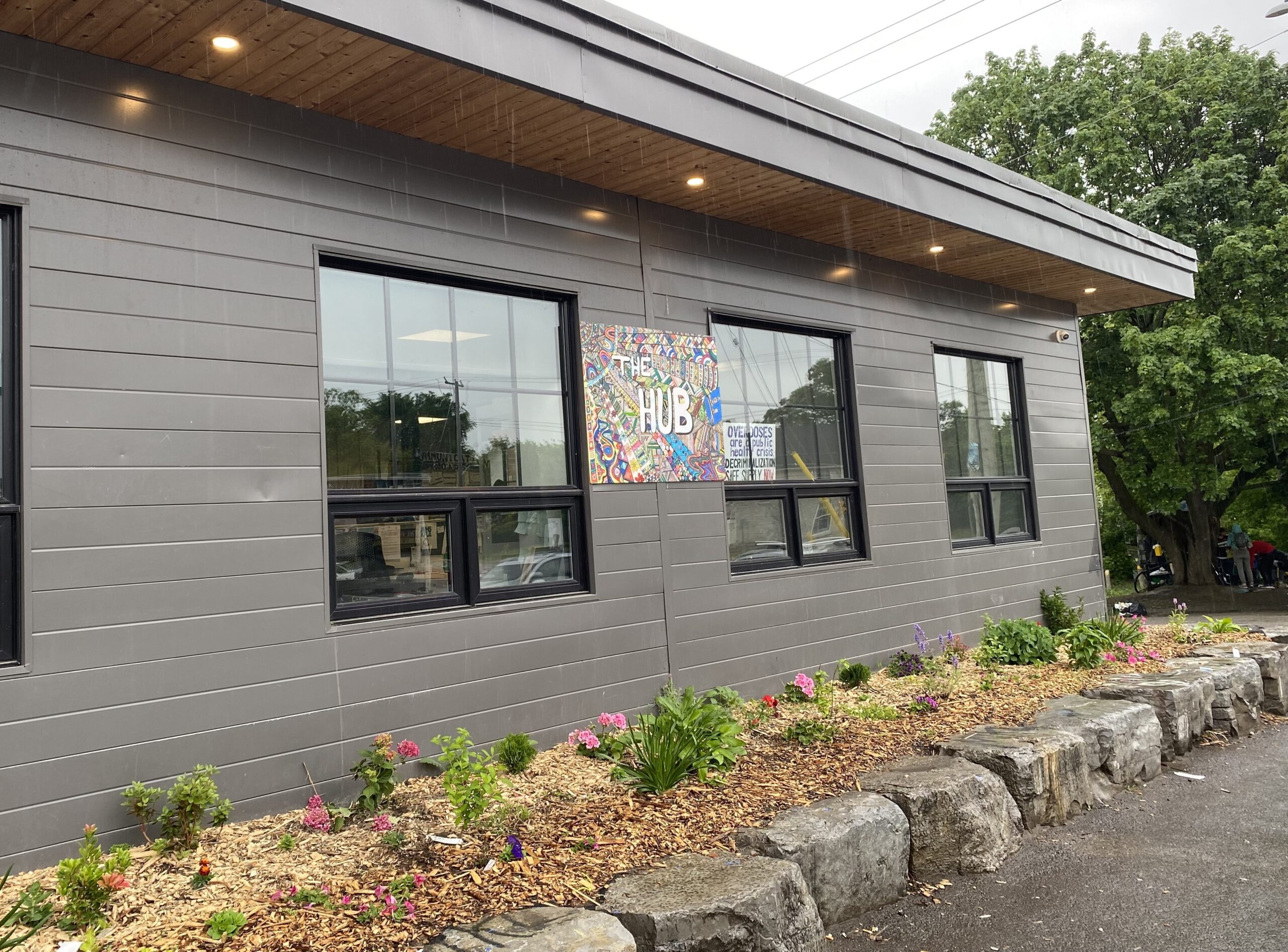
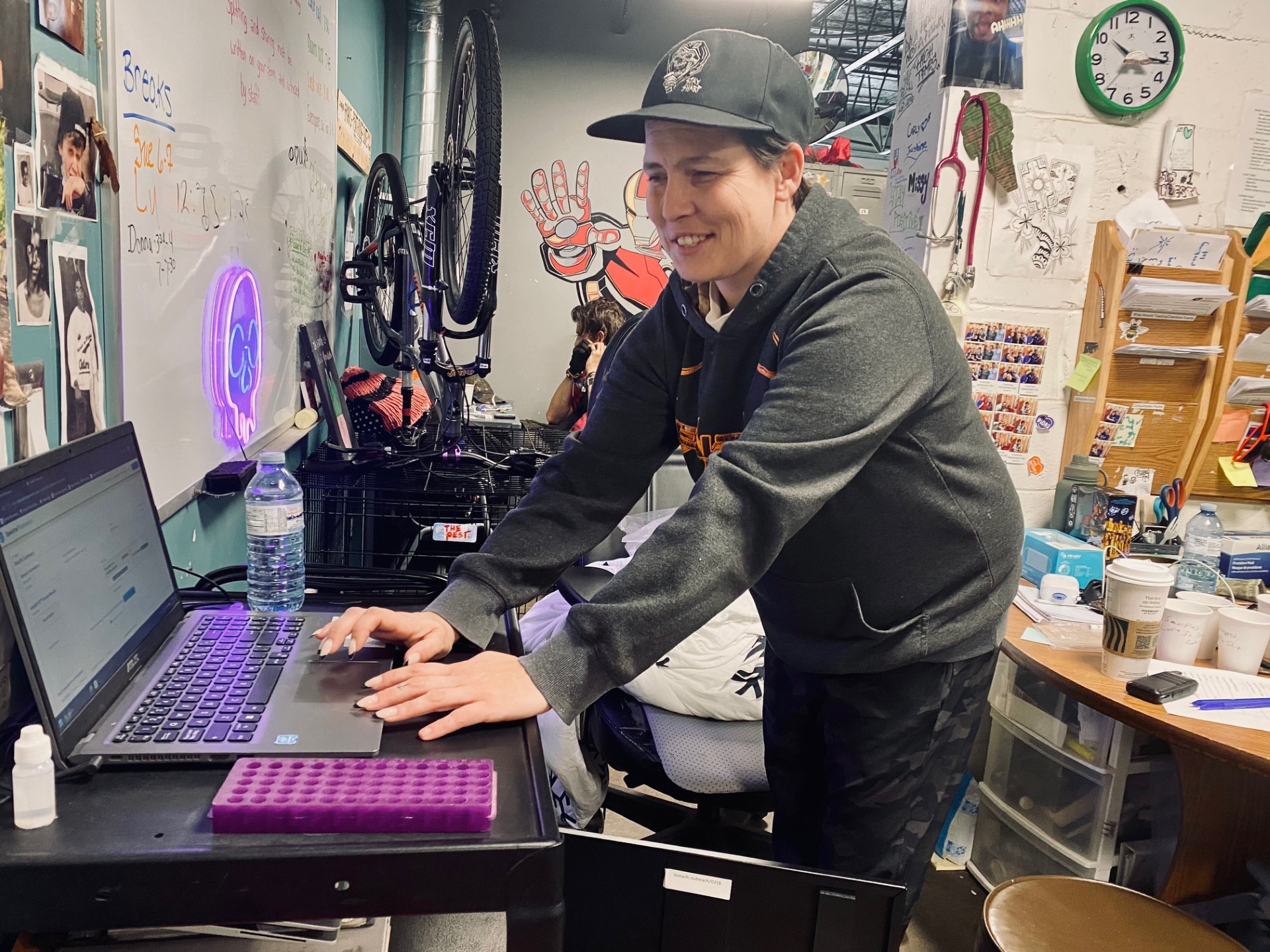
Using spectrometry technology, staff at Consumption and Treatment Services site (inside the Integrated Care Hub) can now analyze a variety of substances for hidden risks, giving people the information they need to make safer choices.
“Drugs exist in every community. The reality is people are going to use them, and we need to keep people safe when they do,” says Justine McIsaac, Coordinator of KCHC’s Consumption and Treatment Services (CTS).
Kingston, like many communities across Canada, is in the grip of a drug poisoning crisis. To prevent overdoses and save lives, CTS (housed in the Integrated Care Hub) has introduced the area’s first-ever drug-checking program.
Using state-of-the-art spectrometry technology, developed right here in Kingston, CTS staff can now quickly test a range of substances for hidden dangers, helping people make safer choices when it comes to the substances they’re using.
Here at CTS, people can come in and test their drugs on the spot, find out what’s really in them, and make safer decisions. Sometimes that means discarding them, using less, or warning their peers. It’s also a great opportunity to build rapport and relationships with people.
The drug-checking program grew out of a partnership between Justine and Queen’s University. With Justine’s support, the university team secured a Health Canada grant to pilot their equipment locally, with backing from the municipality. The funding covered a $30,000 spectrometer—called a Spectra—that can detect tiny traces of substances, even residue on paraphernalia, to determine exactly what’s in them.

Since the program was launched, people from across the community have come in to have their substances tested. In one case, a university student thought they were purchasing ecstasy, only to discover through testing that the pill was actually pressed fentanyl. Because they checked the pill before ingesting it, they were able to discard it, avoiding a possible overdose.
“Having the Spectra here is a game-changer, but it only gives part of the picture,” says Justine. “For more detailed results, we send samples to the Ontario Drug Checking Program in Toronto. They can analyze substances with even greater precision, identify trends in the local drug supply, and help us issue alerts when dangerous drugs are circulating. This partnership means we can protect both individuals and the community more effectively.”
Matthieu Prehu-Quillard, an Overdose Prevention Support Worker, says clients at CTS have found the program especially helpful for avoiding unexpected and dangerous additives, such as heavy tranquilizers including xylazine. For staff onsite, the program is also a game-changer, as it allows them to understand what substances clients have been exposed to and respond appropriately to keep people safe.
“Many clients do not want tranquilizers or benzodiazepines mixed into their drugs, as these substances can suppress breathing and increase the risk of overdose — even for those already using opioids,” Matthieu explains. “By testing their substances onsite, clients can make informed choices and avoid these dangerous combinations.”
The Spectra machine is now making its way into communities across Canada. Justine is also consulting with programs in the U.S. to help bring the technology south of the border.
With this advanced, locally-developed tool available at CTS, Kingston is fortunate to have a program that not only keeps clients safe but also strengthens the community’s ability to respond to an ever-changing landscape.